


STUTTGART MODERN
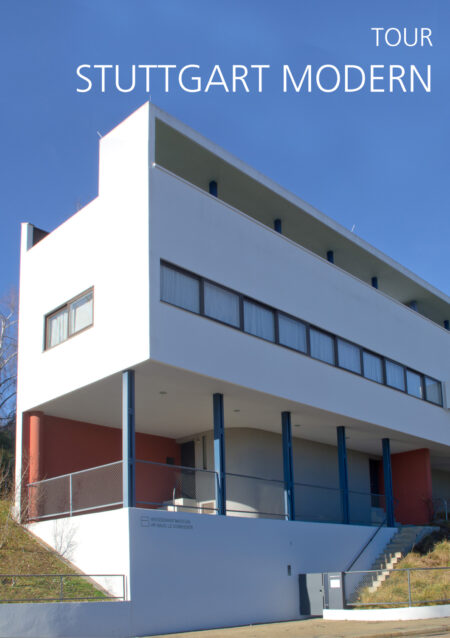
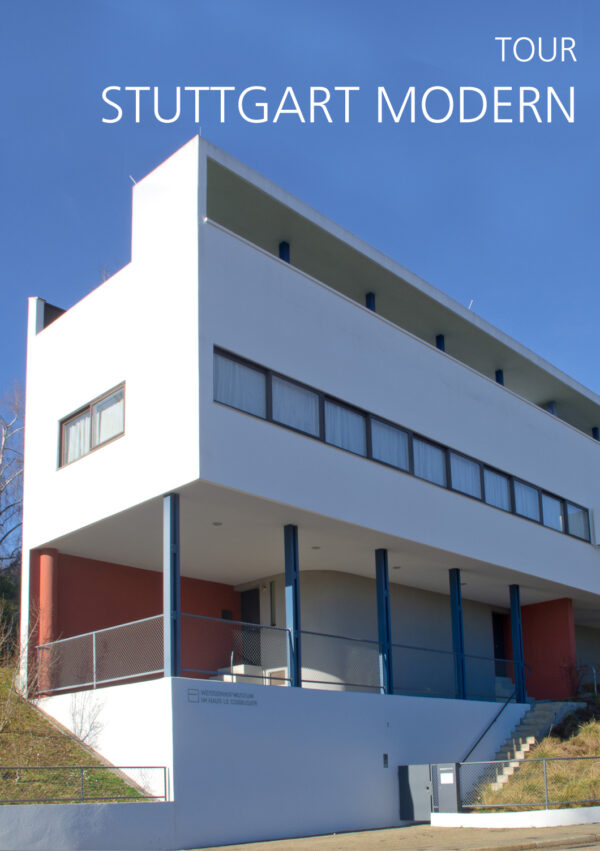
Stuttgart in the 1920s was a modern city! Ernst Otto Oßwald’s Tagblattturm tower and Erich Mendelsohn’s Schocken department store bear witness to an openness to new ideas that is surprising in Stuttgart. Following the success of the Werkbund exhibition ‘Die Form’ (The Form) on the vacant railway site in the city centre in 1924, the idea of a proper building exhibition on the theme of ‘Die Wohnung’ (The Apartment) took shape. Under the direction of Ludwig Mies van der Rohe, 17 international architects were able to realise their ideas for new living. Among them were two buildings by Le Corbusier – today they are UNESCO World Heritage Sites.
But there were also architects who felt that the new ideas went too far, were too extreme. And in 1933, just a few hundred metres away, they realised a counter-design: the Kochenhof estate.
On our walk from the Weissenhofsiedlung to the Kochenhof, we will also learn about other ‘modern’ projects, such as the Brenzkirche, the Killesberghöhe, an exclusive residential area planned by architectural firms such as Baumschlager, Eberle and David Chipperfield, as well as the new visitor information centre by Barkow Leibinger, which is being built as part of the IBA 2027.
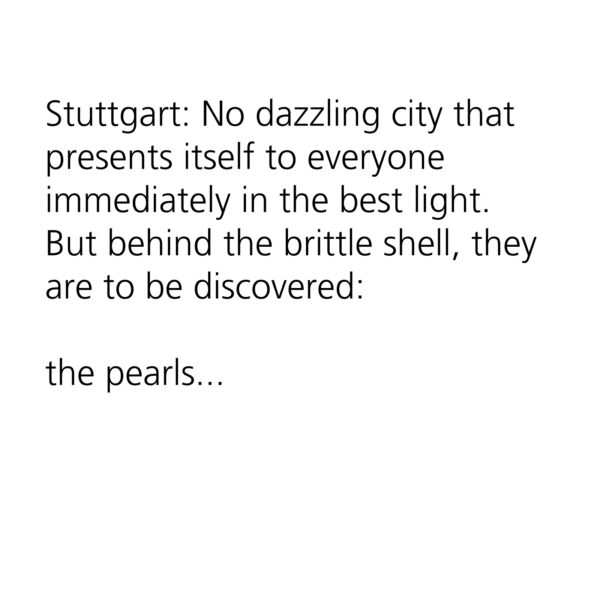
Stuttgart…
Stuttgart is conservative and experimental, avant-garde and traditional – this ambivalence can be seen in the mentality of its people, in politics and also in the city’s architecture. In the 1920s, the Weissenhofsiedlung presented a new way of living – which was called into question a few years later by the Kochenhofsiedlung. The architecture on display in the first exhibition is still ‘modern’ today. The railway station, the market hall and even the ‘King of England’ are more traditional in their design language, but no less interesting. The Liederhalle (concert hall), the television tower and the State Gallery, on the other hand, are architectural icons that were innovative and epoch-making worldwide in their day!
But newer projects have nothing to hide either: the Daimler Museum by UN Studio, the extension of the State Library by Lederer Ragnarsdóttir Oei and the John Cranko School by architects Burger Rudacs, to name just a few of the newer architectural beacons!
LECTURES
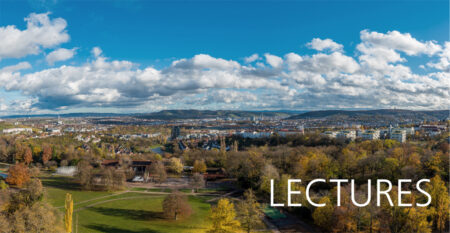
URBAN DEVELOPMENT & STRATEGIES IN STUTTGART
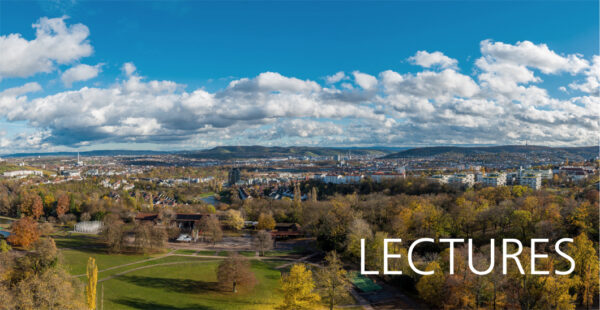
Particularly for guided tours lasting several days, we recommend an introductory talk at the start of the tour. We will introduce you to the city’s history and Stuttgart’s current urban strategies via a PowerPoint presentation, but we can also give talks on various other topics relating to Stuttgart, or on more general aspects of urban planning, urban phenomenology or architecture.

NETWORK
GUIDING ARCHITECTS
GA Stuttgart is member of Guiding-Architects, an international network of architectural guided tours. Our members are independent firms and architecture firms that offer professional tours in their respective regions or cities.
Our guided tours, led by skilled specialists, focus on the contemporary architectural features of the cities and the current development areas, as well as on the visits of sites in their urban context and on their social and political environment. The members of Guiding-Architects stand out for their professional skills both in architecture and in the organization of their guided tours. They develop their professional activity as architects in their place of residence; they are familiar with specific realities, keep a close relationship with the local architectural scene and are therefore able to make concrete recommendations regarding places to visit.
You can find information on the current condition of partners and destinations at www.guiding-architects.net.
STUTTGART REBUILT
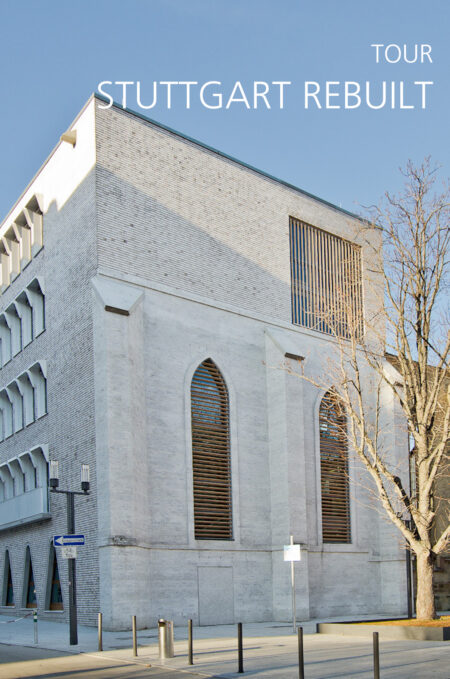
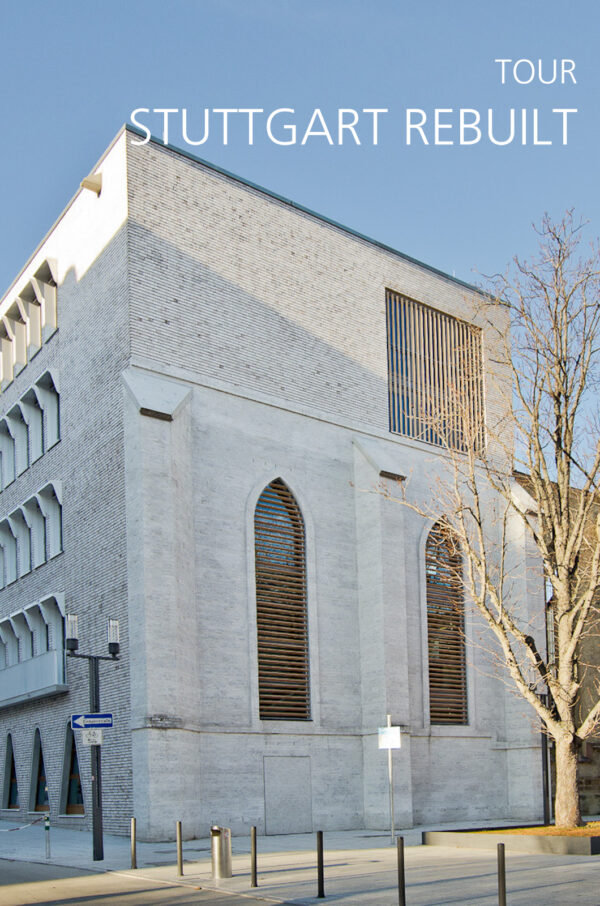
The bombs of the Second World War caused enormous damage to the centre of Stuttgart. 80% of the city centre’s buildings were destroyed. Should the city be rebuilt, or should the opportunity be seized to completely rethink the city? Some of the new buildings provided residents with more light and air, but were sometimes problematic in terms of urban planning. Others have blended in very well and are now an integral part of the city! We will look, for example, at the ‘King of England’ and the market square development, as well as newer projects such as the Dorotheenquartier, the House of Tourism and the ‘Vier Giebel’ project. The Tagblatturm opposite, the world’s first high-rise built in exposed concrete, is an icon of modernism. The new green block on Calwer Passage by Ingenhoven Architects aims to contribute to a sustainable improvement in the urban environment. The Hospitalhof, designed by the Stuttgart-based firm Lederer-Ragnarsdottir-Oei, which is intended to be an ‘old’ site within an otherwise new surroundings, marks the end of our tour.
STUTTGART 21
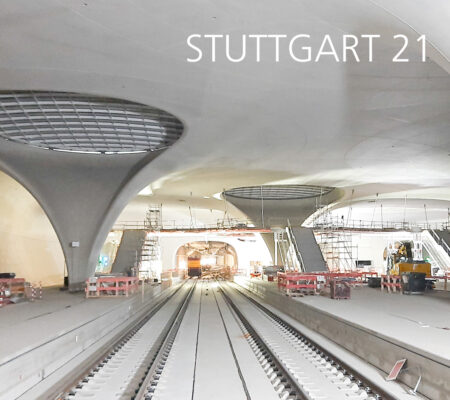
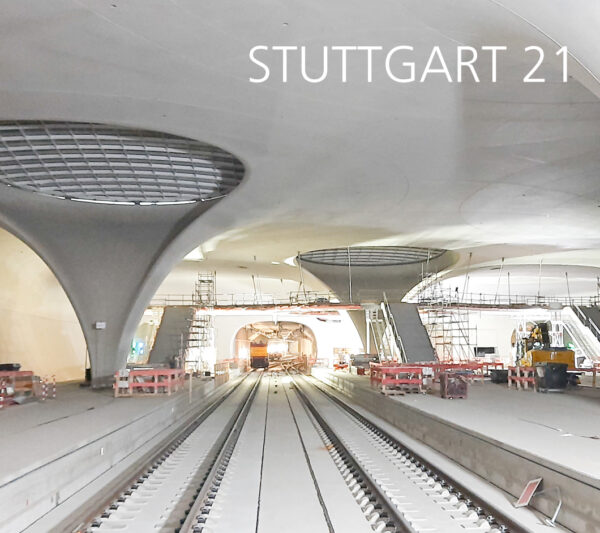
Stuttgart 21 – the city is getting a new railway station. The issue has become well known beyond the region. But what exactly is actually going to be built?
There is no doubt that, as well as providing the city with a new railway station, the Stuttgart 21 project will, above all, create new areas for urban development on the track beds that are being freed up. Directly behind the station, the first of these areas – the Europaviertel – is now almost fully developed. Can this first developed area serve as a model for the development of the remaining sites? Can we describe it as a forward-looking, liveable new neighbourhood?
The new Rosensteinviertel is still in the planning phase. What is to be built here?
And the architecture of the station itself is, of course, spectacular: 28 double-curved calyx columns support huge skylights that form the station roof. The old Bonatz building is being renovated and modernised.
Unfortunately, we are unable to enter the station construction site as part of our guided tours – you may need to book this separately – but, for example, on our ‘STUTTGART ZENTRAL’ tour, we will cover this topic and explain on site, using plans and sketches, what is to be built in Stuttgart’s city centre.
DIPL.-ING. ULRICH KÖLLE
Founder and managing director of GA Stuttgart.
Studied architecture at the Technical University of Dresden and the ETSAV Sant Cugat (Barcelona). | Worked in various architecture firms in Stuttgart and Barcelona. From 2008 own office pineal architecture in Barcelona. From 2011 managing director of GA Barcelona | Until 2017, research associate at the University of Stuttgart, Institute for Sustainability, Building Construction and Design. Further teaching activities in collaboration with universities in Hamburg, Zurich, Barcelona and Dresden.
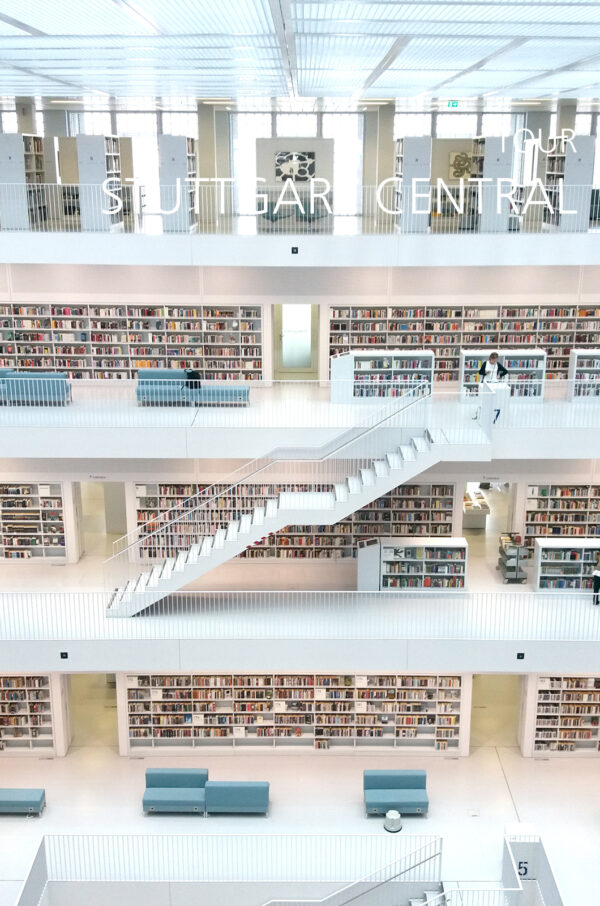
STUTTGART CENTRAL
The centre of Stuttgart – multi-lane traffic corridors cutting through it, fragments of old representative architecture and a hodgepodge of post-war modernism of varying quality. The old town, destroyed during the war, was largely not reconstructed after the war but rebuilt in a contemporary style.
How do architects respond to this context? What building concepts do they use to counter these sometimes problematic urban spaces?
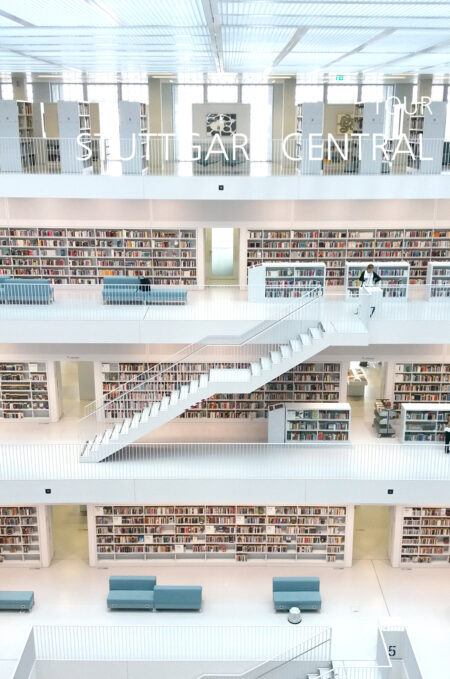
The art museum, which turns a scar on the city into a building concept. The extension of the State Library, designed by the Stuttgart-based firm Lederer-Ragnarsdottir-Oei, or the John Cranko Ballet School, which makes clever use of the city’s topography.
Can the new buildings match the quality of Stuttgart’s numerous architectural icons, such as the Liederhalle by Gutbrod and Abel or the State Gallery by Stirling and Wilford?
We will take a walk through the city to look at the best examples, get an idea of the developments of the last 15 years and venture a look into the future. We will also touch on the much-discussed Stuttgart 21 project, which extends beyond the city limits: the new railway station and the associated new urban development projects.
Our focus is on contemporary architecture and industrial, experimental building developments, as well as on highlighting current urban strategies.
FOR WHOM?
Our guided tours are primarily aimed at a specialist audience with an interest in architecture: architects, town planners, landscape architects, as well as construction firms, property associations, housing cooperatives, politicians, city and planning authorities, and students of architecture and landscape architecture, etc.
We also aim to appeal to members of the general public with a general interest in the built environment. As architects, we are actively involved in shaping the city and wish to convey the complex interrelationships of urban development clearly from our current, contemporary perspective. At the same time, we draw on our teaching experience to communicate architectural concepts effectively.
We conduct our guided tours in German, English or Spanish.
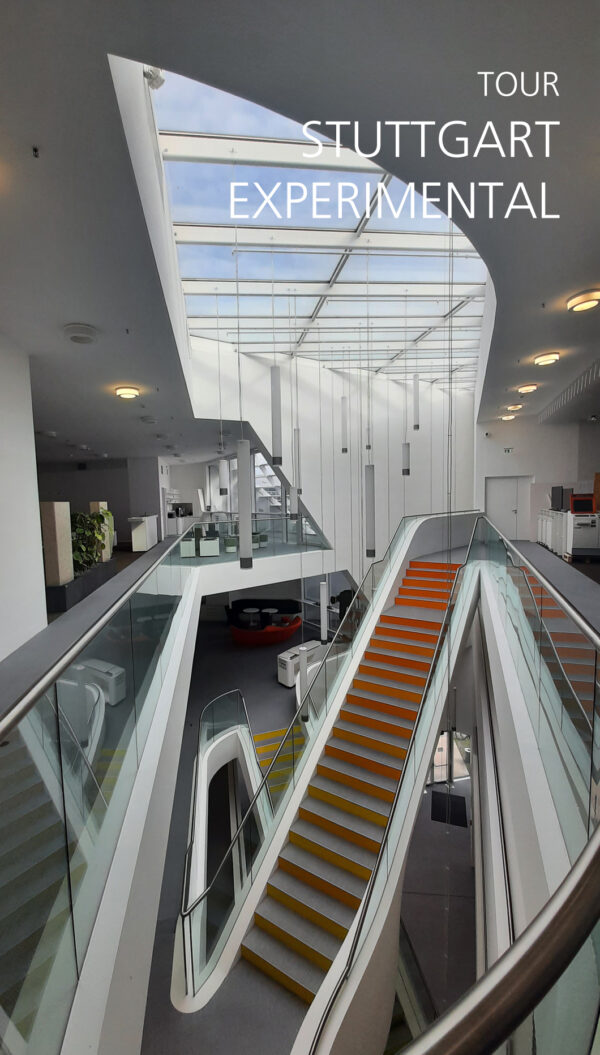
STUTTGART EXPERIMENTAL
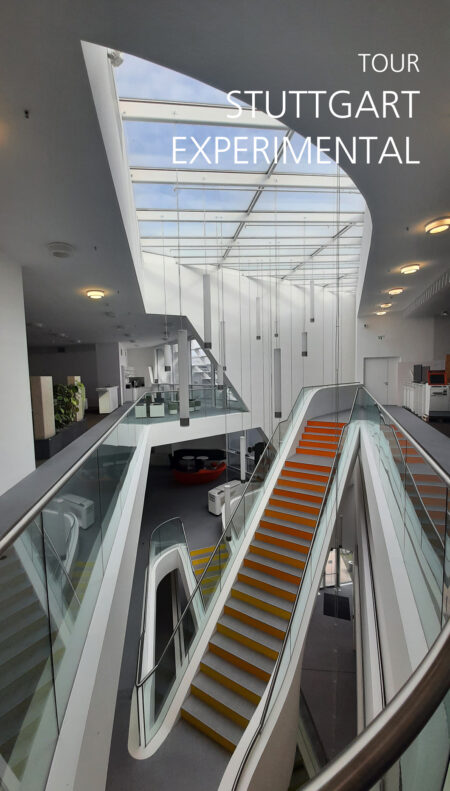
Vaihingen Campus – a university hub in the woods. In 1959, work began on clearing the Pfaffenwald, situated right next to the Stuttgart suburb of Vaihingen and forming part of the green belt around Stuttgart, in order to build university buildings for the University of Stuttgart. From the outset, the open meadow ‘in the woods’ provided space for experimental buildings.
The ‘Bauhäusle’, a student hall of residence built by the students themselves – erected as a temporary solution but still intact and much loved – is an early example of participatory architecture. Right next to it stands the now famous Hysolar building by the Behnisch architectural practice, an early deconstructivist manifesto. The Centre for Virtual Engineering is also a collaboration between the architects (UN Studio) and the Fraunhofer Institute, in which interdisciplinary project teams directly incorporated the new institute’s research findings into the building’s construction.
On a walk across the campus, we will discover these and other experimental architectural projects.

LOGISTICS OF THE TOURS
In addition to the architectural tours and lectures, we offer you all the local services associated with your trip. We will be happy to reserve a restaurant for you and organise suitable transport. We take care of the coordination and are happy to act as an intermediary.
TRANSPORT
Depending on the programme and the client’s wishes, we travel on foot or by various means of transport on our tours. We usually like to use public transport in the city centre for groups of up to a certain size, and we may also use a private bus. However, bicycles (or e-bikes) are also a great way to explore the city centre. We are also happy to integrate a boat trip or sightseeing flight into your tour, depending on your wishes and availability.
Bus
We organise the bus trips required for the tours. Once the programme has been finalised, we will provide you with a complete quotation.
Bicycle, e-bike:
We can also organise a tour by bicycle or e-bike. Just get in touch with us. (For groups of up to 15 people)
COMMUNICATION
How do you communicate with bigger groups? At sizes over 25 persons we use a mobile, wireless audio system. Every participant gets a light headset and the guide speaks with a microphone, so he can be heard also form a distance or in a noisier surrounding.
An individual offer for transport or audio system we can prepare for you during the planning of the tour.
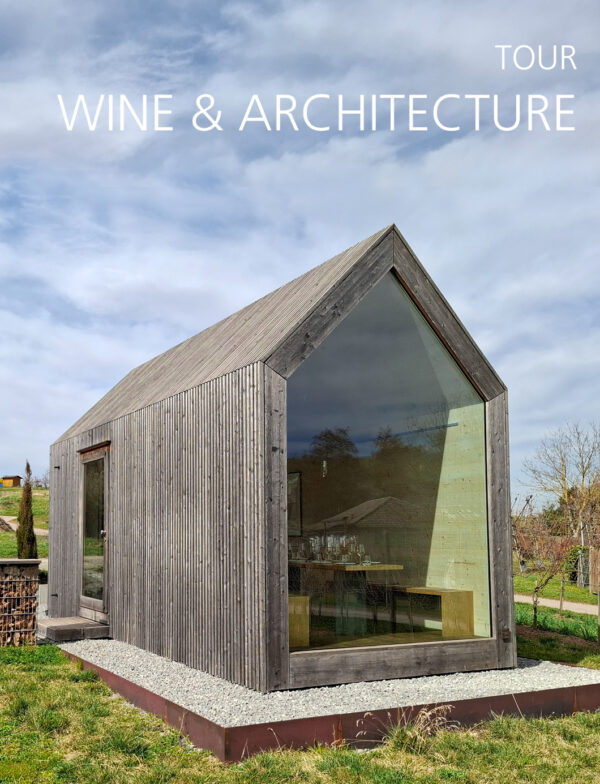
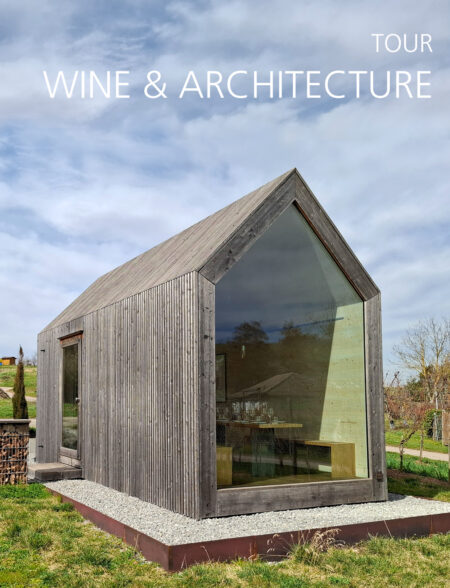
WINE & ARCHITECTURE
In the Remstal valley, just outside Stuttgart, wine and architecture come together in an impressive way. Between rolling vineyards and modern buildings, winemakers show how tradition and innovation can blend harmoniously.
History comes alive at the Alte Kelter Miedelsbach, a lovingly restored half-timbered building that now serves as a cultural meeting place and reminds visitors of the roots of regional winegrowing. In Winterbach, the Ellwanger Winery impresses with its clear, contemporary architecture that reflects openness and craftsmanship. In Weinstadt-Gundelsbach, the Leon Gold Winery impresses with its clear, sustainable architecture that blends sensitively into the vineyards. The Singer-Bader Winery in Korb also stands for purist forms and natural materials – a place where wine aesthetics can be experienced spatially. The wine culture is complemented by the Club Traube in Stuttgart-Wangen, which combines wine, design and urban lifestyle.
Join us on a tour through the Remstal valley and experience the beauty of good architecture combined with the enjoyment of fine wines.
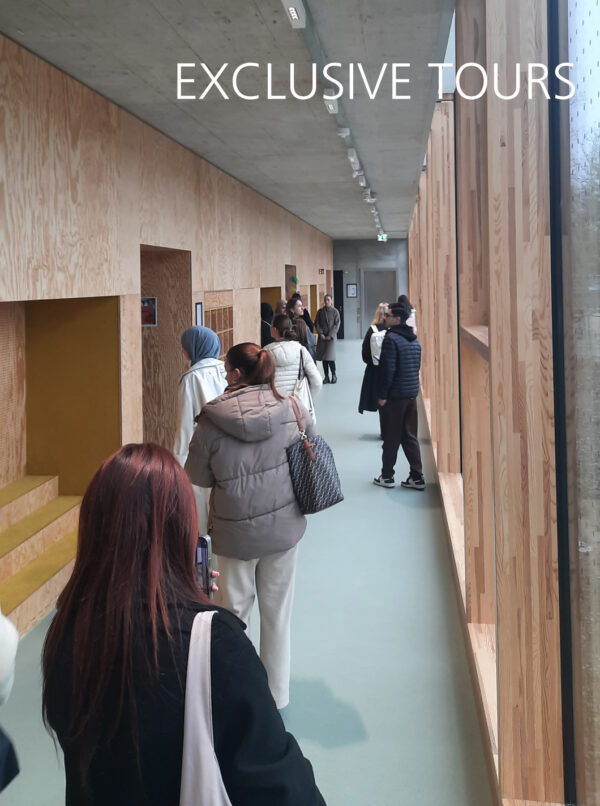
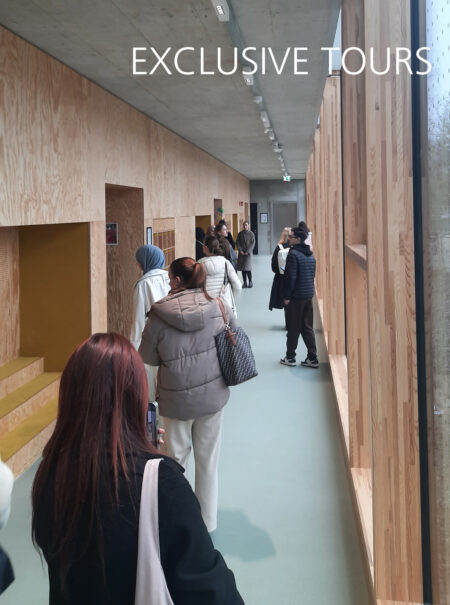
EXCLUSIVE TOURS
Do you want an architectural tour that is completely tailored to your needs? Then you’ve come to the right place!
Exclusive tours are organised thematically and logistically according to the client’s wishes. They are designed for discerning clients with unusual content or logistical requirements. We also organise visits to special properties, interior tours and meetings with architects, artists or authorities. We can also organise tours on specific architectural themes.
We also offer architectural tours in the following cities in South West Germany: Tübingen, Heilbronn, Heidelberg, Karlsruhe, Ulm and Freiburg.
Other cities on request.
We will be happy to provide you with a tailor-made offer.
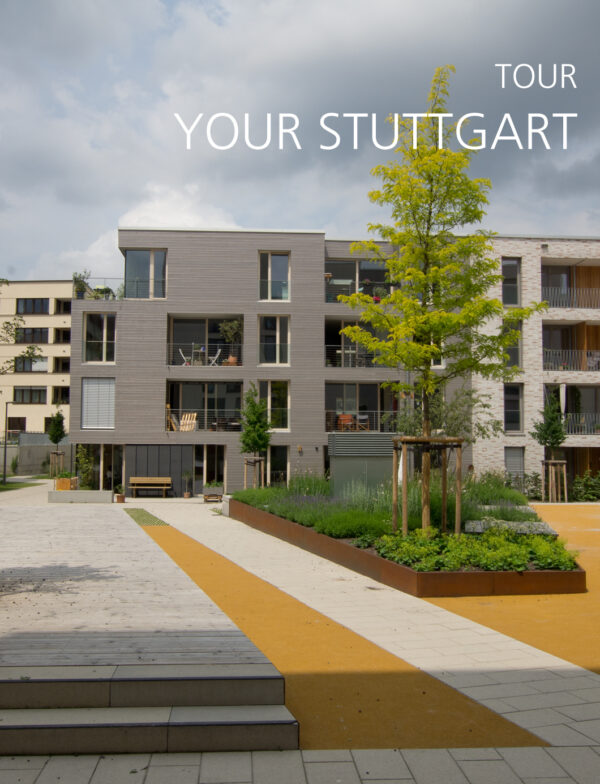
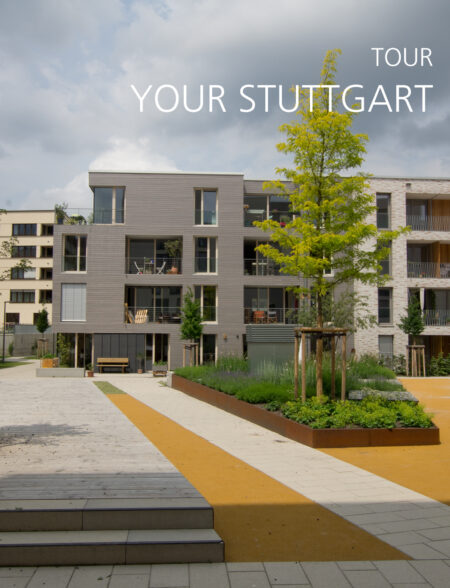
YOUR STUTTGART
There is so much to see in Stuttgart! It can be difficult to choose when you don’t have much time.
- The Stuttgart TV Tower (Fritz Leonhardt) is the world’s first reinforced concrete TV tower! Its elegant, slender shape is considered an icon of engineering.
- The Mercedes-Benz Museum (UNStudio) impresses with its double spiral structure, which translates movement and speed into architecture.
- The Neckarpark is a large-scale urban development area with sports, leisure, office and residential uses designed by various architects.
- The Olga site on the grounds of the former Olga Hospital was planned by several firms: the result is a small-scale residential quarter with a diverse population structure and exciting urban spaces.
- The Porsche Museum (Delugan Meissl) features a spectacular floating construction made of steel and glass.
- The University of Stuttgart campus in Vaihingen: since the 1970s, all kinds of experimental teaching, research and residential buildings have been constructed on the site outside Stuttgart. Atelier 5, Frei Otto, Behnisch & Partner, UNStudio and Hartwig Schneider are just a few of the firms that have created outstanding architecture here.
Select two projects and we will explore them together.
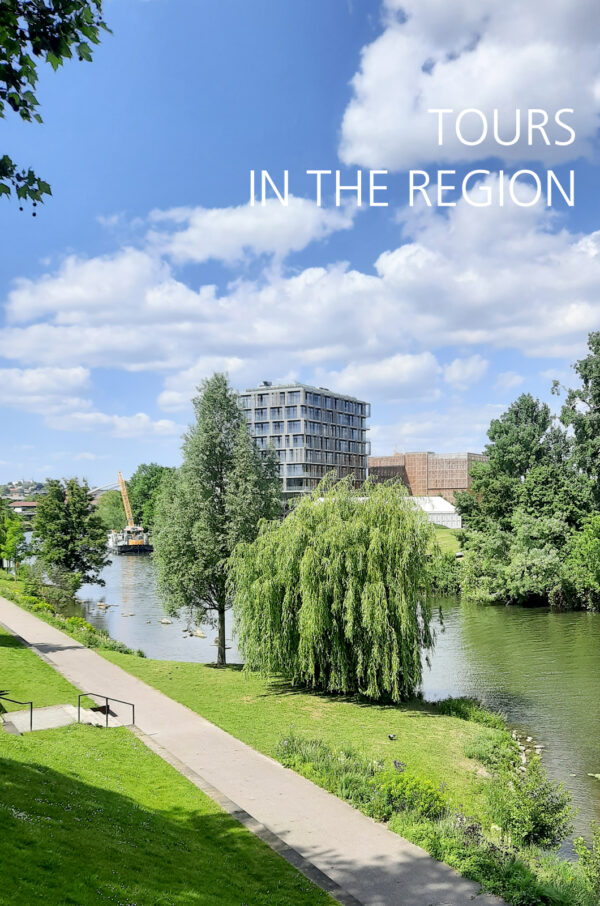
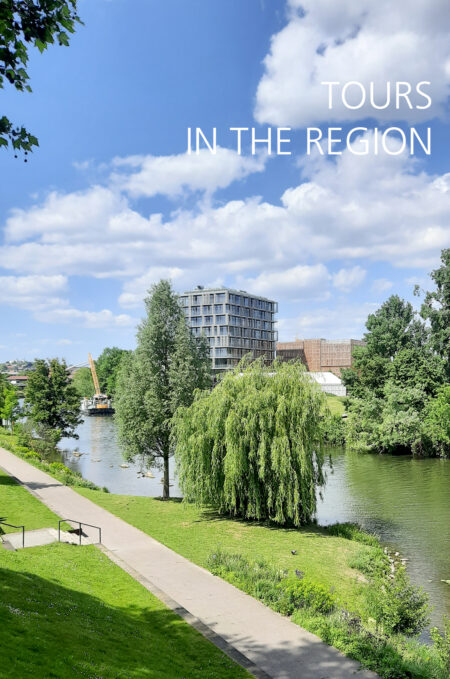
TOURS IN THE REGION
The Stuttgart region also has a lot to offer. We therefore organise guided tours in Heilbronn, Mannheim, Heidelberg and Freiburg.
Was the town where you’d like to discover the latest architecture not on the list? If so, please do get in touch.
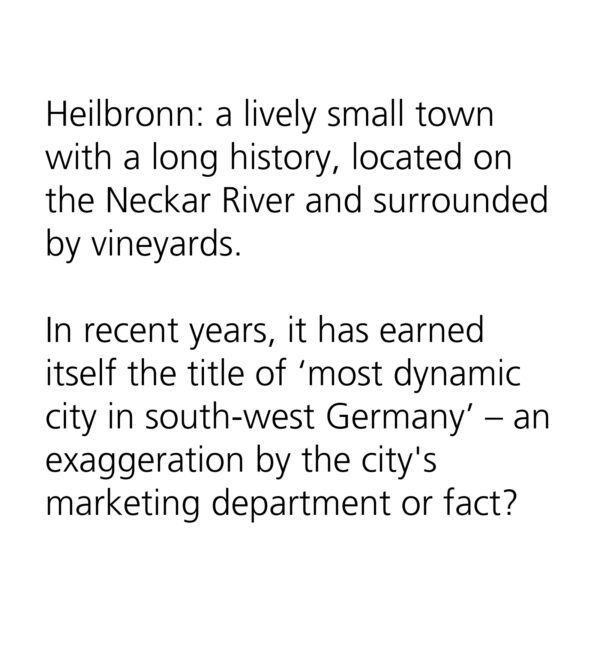
What is certain is that Heilbronn is an economically strong location. The Dieter Schwarz Foundation is involved in a wide range of activities in the city. Examples include experimenta, Germany’s largest science centre designed by Sauerbruch Hutton, and the new education campus, which now has around 8,000 students (Auer Weber, Glück+Partner, etc.).
As part of the 2019 Federal Horticultural Show, the city took the opportunity to initiate major urban development changes: a largely derelict area directly behind the railway station and on the Old Neckar river was developed into an attractive neighbourhood. In addition to high-quality small-scale developments by various architects, two projects stand out in particular: the first high-rise building in hybrid timber construction by Kaden + Lager, ‘Skaio’, and the Josef Schwarz School by Behnisch Architekten.
Join us as we explore the latest urban developments in Heilbronn!
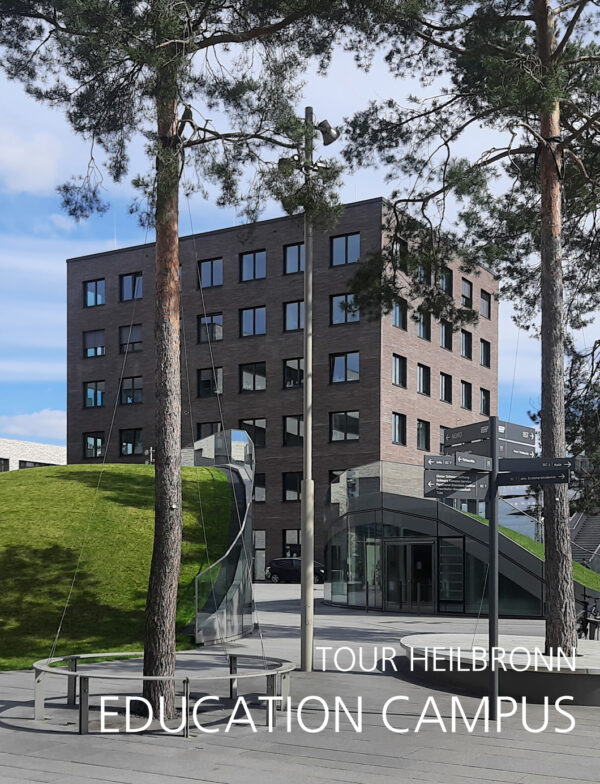
HEILBRONN EDUCATION CAMPUS
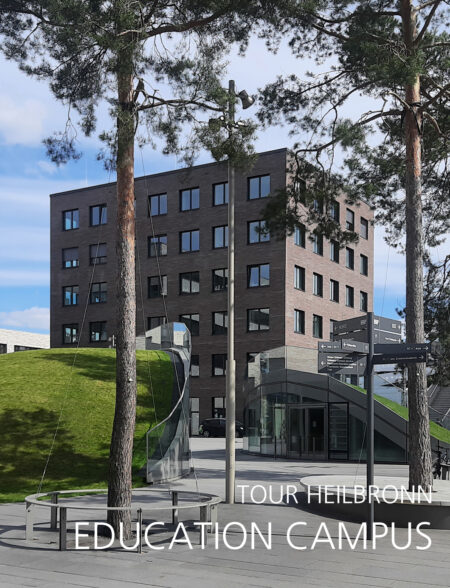
It all began with a competition in 2009 – on the initiative of the Dieter Schwarz Foundation, a new ‘education campus’ was to be created for various educational institutions in the immediate vicinity of Heilbronn city centre. However, interest in the courses on offer grew so rapidly that another competition was soon announced, which Auer Weber won. Across the railway line, connected by a curved bridge, an extended campus with institute buildings, lecture halls, a library and a canteen has since been built. And the next extension is already in the pipeline – in future, the campus is to extend as far as the Old Neckar.
The extension to the Experimenta science centre, which has been in existence since 2009 and has been so successful, is also located in the immediate vicinity. The Hagenbucher Speicher, which previously housed the museum, had become too small. The Sauerbruch Hutton office won the competition with its stack of steel and glass. A spiral of space, with large rooms for exhibitions and changing views of the city.
On a walk, we will analyse the most interesting projects of the new educational and scientific architecture in Heilbronn.
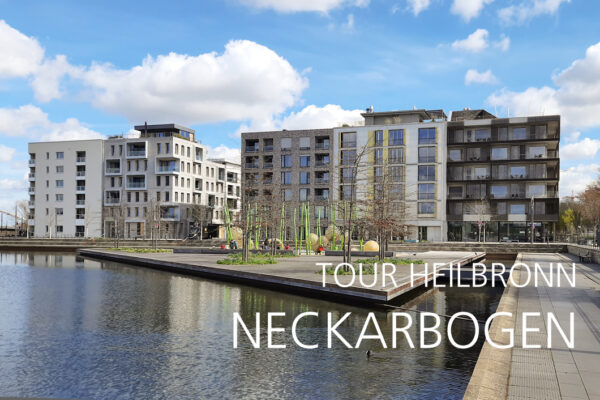
HEILBRONN NECKARBOGEN
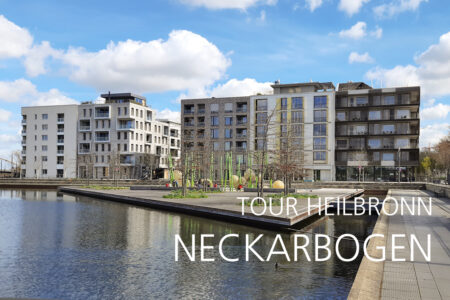
In 2005, the city of Heilbronn seized the opportunity to develop a new, diverse urban quarter by purchasing the brownfield site behind the railway station and directly on the Old Neckar River. The result is a multi-award-winning area that is both urbanistically and architecturally sophisticated. The first construction phase was completed in time for the 2019 Federal Horticultural Show – a model district that combines living, working, learning and recreation in one place. As part of the city exhibition for the 2019 Federal Horticultural Show, Germany’s first timber-framed high-rise building, the ‘Skaio’, was constructed in Neckarbogen. It forms the entrance to the new urban quarter and, at 34 metres, is a high point in just the right place.
The Josef Schwarz School complements the quarter as an innovative place of learning: with modern learning landscapes, spacious open areas and architecture that spatially supports open educational concepts and collaborative working.
Another architectural highlight in this dynamic urban renewal is the Heilbronn 2.0 Innovation Factory, a five-storey building constructed using a hybrid timber construction method by Wächter + Wächter Architects.
We would be happy to show you the latest developments in this area!